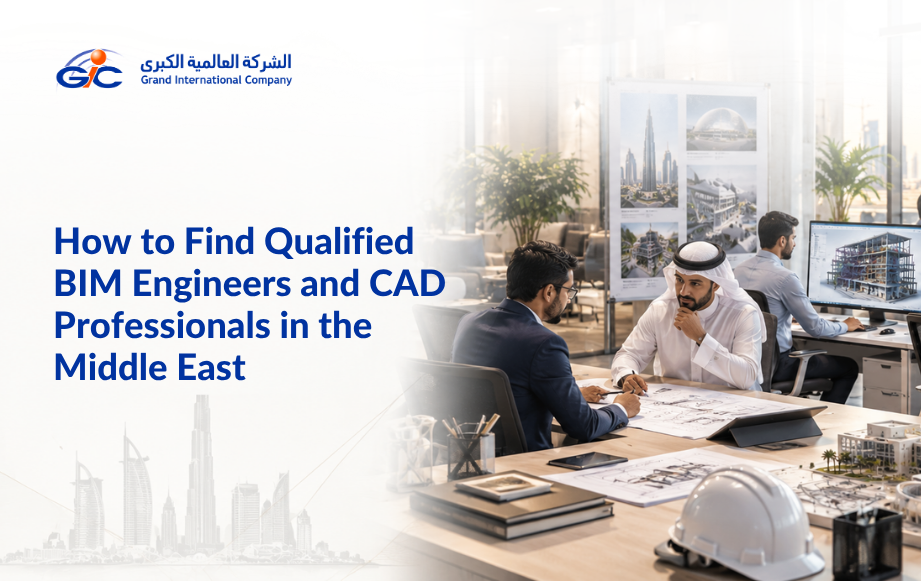

You need a BIM Engineer, or maybe two CAD professionals.
The project is moving, deadlines are getting closer, and the team is already stretched. So you put out a requirement and start receiving CVs.
And then comes the difficult part.
Almost everyone seems to have the software skills you mentioned. Revit. AutoCAD. Navisworks. Five years of experience. Eight years of experience.
But can they actually handle your project?
That is the question that matters.
BIM and CAD professionals are not interchangeable resources you can pick simply by looking at the number of years on a CV. The type of project they have worked on, their coordination experience and their understanding of engineering workflows can make a big difference.
This is particularly important in the Middle East, where BIM is becoming an increasingly important part of AEC and infrastructure projects. Standards such as ISO 19650 are also influencing how project information is managed and exchanged across these projects.
So, when you are hiring in the Middle East, what should you actually look for?
This is where BIM staffing and engineering secondment solutions can make the process easier. Grand International Company (GIC) provides workforce solutions for businesses seeking skilled BIM, CAD, and engineering professionals, helping companies access the right technical resources for their project needs.
The idea is not simply to fill a vacancy. It is about finding people whose skills and project experience fit the work you actually need to get done.
Understanding the Difference Between BIM Engineers and CAD Professionals
BIM and CAD often appear together in job requirements, but they are not really the same thing.
CAD is important for accurate technical drawings, drafting, and documentation. BIM goes further into information-rich models, collaboration, and coordination between different project disciplines.
A CAD professional may focus on precise drawings. A BIM professional may also deal with models, information, coordination, clash detection, and different teams working around the same project data.
That is why the first step is understanding what you actually need before you start going through CVs.
What to Look for When Hiring BIM Engineers in the Middle East
Here are a few things that can help you see beyond the software names and years of experience.
- BIM software expertise – Yes, software knowledge matters. But someone saying “I know Revit” doesn’t tell you much on its own. What have they actually done with it?
- BIM coordination experience – BIM is not one person sitting and working on a model all day. Have they worked with architects, structural teams, MEP teams, clash detection, and model reviews?
- BIM standards knowledge – A BIM model is not just about how good the 3D model looks. The way information is organized and shared matters too, especially on larger projects where standards such as ISO 19650 may come into play.
- Project experience – And then there is the CV question — five years of experience doing what? Residential, infrastructure, industrial, and Oil & Gas projects can be very different worlds.
Essential Skills to Look for in CAD Engineers
A strong CAD Engineer needs more than software knowledge — the real question is whether they can turn that knowledge into accurate, practical drawings that work for the project.
- AutoCAD proficiency: AutoCAD is the obvious starting point, but what matters is how they’ve used it on real projects.
- 2D/3D drafting: Does the role need 2D drawings, 3D work, or both? Look for experience that matches what your project actually needs.
- Engineering drawing interpretation: Can they look at a drawing and understand what it means before making changes? That basic skill can save a lot of trouble later.
- Technical detailing: Small details can cause big headaches when they are missed. Look for someone who can create clear, accurate technical details.
- Shop drawing preparation: A shop drawing has to work in the real world, not just look right on a screen. Experience with practical, usable shop drawings matters.
- Discipline-specific CAD knowledge: Mechanical, electrical, structural, plant, and other CAD work can differ significantly. The candidate’s background should match your project.
- Drawing standards and documentation: Drawings have to follow the required standards and formats. Getting this right can save plenty of back-and-forth later.
- Coordination with engineering teams: CAD work rarely happens alone. Comments, revisions, changes — the person needs to be comfortable working through all of them with the wider engineering team.
BIM Staffing Solutions: A Flexible Way to Build Project Teams
Hiring BIM professionals can take time, especially when you need a specific skill set and don’t want to go through dozens of unsuitable CVs. This is where BIM staffing can give project teams a little more breathing room.
- Access pre-vetted professionals: Instead of sorting through endless CVs, you can access professionals already screened for their skills and experience.
- Fill specialized BIM roles: Need a Revit specialist or BIM Coordinator? Staffing solutions help you find the specific skills the project is missing.
- Scale teams according to project requirements: Workload suddenly increased? Add professionals when you need them and scale back when the project settles down.
- Support short-term and long-term projects: Whether you need someone for a busy project phase or a longer requirement, staffing can work around your situation.
- Reduce recruitment workload: Less time buried in CVs, interviews, and follow-ups means more time for actually running the project.
- Mobilize professionals faster: When deadlines are already getting close, waiting through a long hiring process isn’t always an option.
- Integrate specialists into existing project teams: The right professional should be able to step into your team, understand the workflow, and get moving.
Engineering Secondment Solutions for Oil & Gas Projects
Oil & Gas projects can get complicated very quickly. You may need a piping specialist for one phase, more CAD support when drawings pile up, or experienced BIM professionals when coordination becomes difficult. Have you ever reached a stage where the project is moving, but the team simply doesn’t have enough hands? This is where a flexible engineering secondment solution can take some pressure off the project team.
- Plant design: Bring in people who already understand plant projects, instead of starting from scratch with someone new.
- Piping: When piping work suddenly piles up, experienced professionals can help take some of that pressure off the existing team.
- Structural engineering: Need support with equipment structures, platforms, or pipe racks? Relevant structural experience can make a real difference.
- Mechanical engineering: When mechanical work keeps growing, but the deadline doesn’t move, additional manpower can help the team catch up.
- Electrical engineering: Experienced electrical professionals can help handle project-specific requirements without adding another lengthy recruitment process.
- Instrumentation: Need more instrumentation support? Staffing solutions can help you find people with relevant industrial and Oil & Gas experience.
- 3D modeling: When the model keeps growing and revisions keep coming, extra 3D modeling support can stop the existing team from getting buried.
- CAD drafting: Too many drawings and not enough people? Additional CAD professionals can help clear the backlog before it becomes a bigger headache.
- BIM coordination: When disciplines start clashing around the same model, experienced BIM professionals can help keep coordination on track.
- As-built documentation: Once construction is over, someone still has to document what was actually built — and additional manpower can help get it done without overloading your core team.
Why Choose GIC for BIM Staffing & Engineering Secondment Solutions?
This is where GIC Middle East brings something beyond straightforward recruitment.
GIC’s work in BIM goes beyond software supply. The company also has capabilities in BIM consulting, implementation, training, and professional development.
Why does that matter when you are looking for manpower?
Because BIM staffing makes more sense when the staffing partner understands the work itself.
A BIM Engineer may need to work within a company’s existing standards. A BIM Coordinator may need to coordinate several disciplines. A BIM Manager may be responsible for much more than model production.
GIC can support multidisciplinary BIM workflows, BIM standards, and implementation requirements, along with staffing for organizations that need specialized technical resources.
Depending on the requirement, this can include BIM Engineers, BIM Coordinators, BIM Modelers, BIM Managers, CAD Engineers, and CAD drafting professionals.
For more demanding engineering projects, GIC also provides engineering secondment solutions, including support for Oil & Gas requirements.
What You Get with GIC BIM & CAD Staffing
1. Specialized BIM & CAD Professionals – Get access to professionals with the specific BIM, CAD, and technical skills your project actually needs.
2. Oil & Gas Engineering Secondment Solution – Need people who understand the demands of Oil & Gas projects? GIC can support requirements across multiple engineering disciplines.
3. Flexible Project-Based Staffing – Whether you need a few specialists for a busy phase or a larger team for a long-term project, staffing can match your workload.
4. Middle East & GCC Expertise – GIC understands the project environment and workforce requirements across the Middle East and GCC, helping companies find relevant technical talent.
5. BIM Expertise Beyond Recruitment – It is not just about finding someone who knows Revit or AutoCAD — GIC brings an understanding of BIM workflows, coordination, and project requirements to the staffing process.
Finding the Right BIM or CAD Professional
Hiring should not come down to “Revit – 5 years” or “AutoCAD – 7 years.” What matters is the work behind those numbers — projects, responsibilities, coordination, and industry experience. When deadlines are closing in, finding the right technical people can become another project itself; that’s where Grand International Company can help.
FAQs
A. Software skills, coordination, standards knowledge, and project experience
A. AutoCAD, drafting, drawing interpretation, detailing, and relevant discipline experience.
A. Yes, for short-term and longer-term requirements.